


YOUR TRANQUILSTAYHANOI IS AT 53 CAU GO STREET, HANOI OLD QUARTER!
Cau Go Street: A Delightful Corner of Hanoi’s Old Quarter
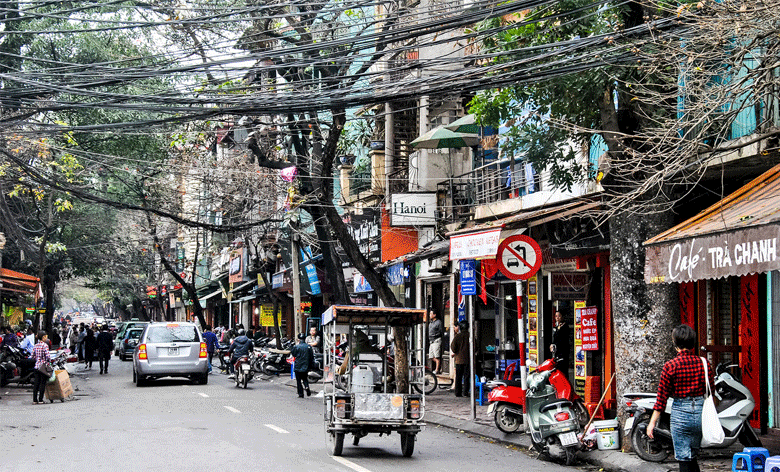
 Cau Go Street, located in Hanoi’s Old Quarter, is steeped in history and holds a significant place in the city’s cultural fabric. The street’s name, “Cầu Gỗ” in Vietnamese, is Named after the wooden bridge (Cau Go) that once connected the street to the Red River’s wharf, this street has seen the ebb and flow of time, standing testament to the city’s evolving history. Here’s a glimpse into the captivating history of Cau Go Street:
Origins:
Cau Go Street traces its roots back to the early days of Hanoi’s development. It is believed that the street was formed during the 15th century when the city was under the rule of the Le Dynasty. It initially served as a residential area for the local population and gradually evolved into a bustling commercial hub.Wooden Bridge:
The street derived its name from the wooden bridge that once existed nearby. This bridge connected the area to the eastern part of the city, providing a crucial link for transportation and trade. The bridge played a vital role in facilitating the movement of people and goods, contributing to the growth and prosperity of the surrounding neighborhood.Historical Significance:
Cau Go Street witnessed significant events throughout Hanoi’s history. During the French colonial era, the street was a prominent gathering place for intellectuals, artists, and revolutionaries, who would often convene in the nearby coffee houses and tea shops to discuss politics and social issues. It became a hub of intellectual and cultural exchange, fueling the city’s spirit of resistance against colonial rule.Transformation and Modernization:
Over the years, Cau Go Street underwent various transformations to adapt to the changing needs of the city. Wooden structures were gradually replaced with more modern buildings, and commercial activities diversified to accommodate the growing demands of residents and visitors. Today, the street is a vibrant mix of traditional shops, trendy boutiques, hotels, and restaurants, all coexisting harmoniously.Touristic Attraction:
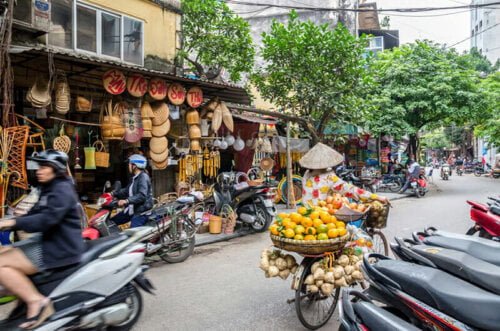
Cau Go Street’s historical significance and its central location in the Old Quarter have made it a popular destination for both locals and tourists. Visitors can explore the street’s charming architecture, sample local cuisine, browse through shops selling traditional crafts and souvenirs, and witness the bustling life that unfolds along its bustling sidewalks.
Views of Hoan Kiem Lake:
One of the highlights of Cau Go Street is its proximity to Hoan Kiem Lake, one of Hanoi’s iconic landmarks. From certain points along the street, visitors can enjoy breathtaking views of the lake’s shimmering waters, the red bridge leading to Ngoc Son Temple, and the vibrant street life that surrounds this picturesque area.
 bustling sidewalks.
Cau Go Street stands as a testament to Hanoi’s rich history and its ability to evolve while preserving its cultural heritage. Its blend of old-world charm and contemporary energy makes it a captivating destination, where the past and present seamlessly converge